Friday, June 5, 2015

Periscope engineer explains why streams aren't always live

Periscope_thumb-1
Feed-twFeed-fb

There's no question that live video has exploded in popularity since the launch of Meerkat and Twitter-owned Periscope. But, as we've learned from hiccups at Meerkat, bringing live video to thousands of people at once presents an extraordinary technical challenge for engineers.

But it turns out, the way Periscope's engineering team addressed this is more obvious than you may think. Periscope’s live streams — particularly more popular ones with thousands of users — aren’t always live, the app’s software engineer for Android said Thursday. Speaking at Airbnb’s OpenAir conference, Sara Haider explained how the company uses an “artificial delay” to ensure that streams don’t get overloaded while keeping comments in sync. Read more...

More about Twitter, Tech, Android Apps, Social Media, and Apps Software

Modern Marketing Essentials Guide to Mobile Marketing (eBook)

This just in... practically the entire world has a mobile phone and a whole bunch of them are smartphones.

Obviously that is not breaking news. We all know that every single day more and more people turn to their smartphone, tablet, etc. to do pretty much everything they can do on a computer.

There is no shortage of statistics to back up and support the fact that the use of mobile as part of an overall marketing strategy is no longer a luxury but is in fact... essential.

That is precisely why you need to download the Modern Marketing Essentials Guide to Mobile Marketing right now or as soon as humanly possible.

The Guide identifies the 5 key things marketers need to know when it comes to Mobile Marketing

  1. Market with cross-channel orchestration
  2. Use smart data and signals to inform your mobile communication strategy
  3. Create a holistic view of customer interactions
  4. Deliver personalized marketing experiences
  5. Prove the value of your mobile marketing strategy

But wait, there's more... a LOT more.

Check out ALL our Essentials Guides:

Modern Marketing Essentials Guide to Data Management

Modern Marketing Essentials Guide to Content Marketing

Modern Marketing Essentials Guide to Cross-Channel Marketing

Modern Marketing Essentials Guide to Social Marketing

Facebook Messenger Ditches Constant Mapping To Lay Groundwork For More Location Features

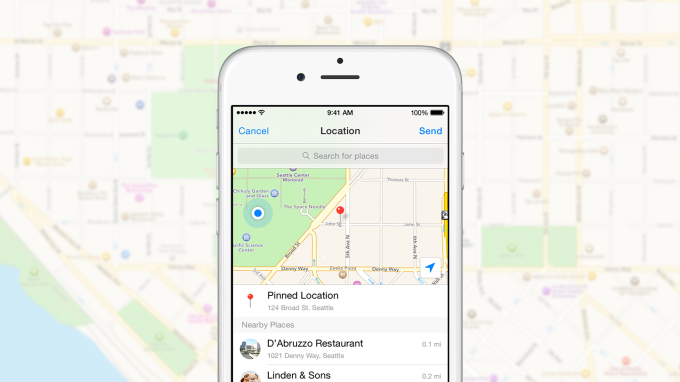
messenger-location-sharing-coverphoto1 Facebook is removing the confusing, slightly creepy always-on location sharing feature in Messenger for a more explicit, one-time way to share where you are or will be. Location will no longer be a “second class citizen”, Messenger Head Of Product Stan Chudnovsky tells me. Instead, Messenger has big plans for GPS features, saying “What we’re launching is the foundation… Read More

Live from IRCE 2015: How to authentically build communities from the co-founder of Reddit

Building brand communities is an important element for every brand, but it’s especially important for ecommerce brands that live solely on the Internet. How can you build a positive community around what you’re selling? The answer is simple: be authentic.

At the MarketingSherpa Media Center at IRCE 2015, Daniel Burstein, Director of Editorial Content, MarketingSherpa (sister company of MarketingExperiments), sat down with Alexis Ohanian, Executive Chair and Co-Founder, Reddit, to discuss the importance of building authentic brand conversations, how to respond to negative comments, content marketing and how all of this translates into value for companies.

As Alexis describes it, Reddit is a “social news site,” as well as one of the largest social media platforms currently in existence. The company also has an impressive brand following. Currently, Reddit has over 170 million unique views, 7.5 billion page views and nearly 10,000 active communities within the site itself.

According to Alexis, a major component of Reddit’s success is creating authentic discussions with consumers.

“In a world where consumers have more and more knowledge every day and more and more choice every day, that is the only way you will win,” he said.

Alexis shared the following tips on the importance of creating authentic brand communities.

Watch the whole interview here:

When it comes to community building, authenticity is key

What Alexis means when he talks about authentic conversations online is treating conversations on the Internet the same as you would conversations in everyday life. Building brand communities takes time — time that’s spent contributing to conversations and helping consumers.

He likens interacting on Reddit and online forums to talking at a cocktail party. If you were at a cocktail party, you wouldn’t interrupt every conversation you were a part of to sell your product. Instead, you would listen and respond to the conversation at hand.

“This is 101 cocktail party etiquette,” Alexis said. “Every other social media platform has trained us to be very unnatural, and Reddit’s the way to just go back to doing what we’ve been doing as human beings for thousands of years.”

Alexis mentioned Bernie Sanders, the first presidential candidate for 2016 to complete a Reddit AMA (Ask Me Anything), as a good example for using Reddit to build a community and, as a result, a positive image. Prior to his AMA, Sanders had already established himself as an active Reddit user, contributing largely to the r/Vermont forum.

He would often contribute to existing conversations in the community, from politics to agreeing with other users about which cafes are best. Sanders was an active user in the Reddit community so his AMA didn’t seem like a publicity stunt. It was a chance for users to communicate with Sanders on a platform where he was already an established user.

“He understands that an hour spent on Reddit just being a user contributing — being a community member — is worth days on other social media platforms because of the ROI,” he said. “Hundreds of thousands of people can see that comment.”

However, this success through authenticity doesn’t only apply to personal brands.

“The brands that are doing it well on Reddit are building relationships that are going to last them for decades,” Alexis said. “They are not thinking about the immediacy of, ‘Oh quick, let’s sell someone something.’ They’re thinking, ‘Let’s make someone love us so that for the rest of their lives they’re going to use us.’”

How to handle negativity in communities

As marketers, when we’re building brand communities, we hope all of our interactions with consumer are going to be full of praise. However, this is often not the case. Alexis’s advice for handling problems or negative comments about your brand is to remain authentic and give genuine, human responses.

“All I tell people is, ‘Imagine you’re at the cocktail party, and someone’s ranting to their friend about your product … How would you handle that situation?’” he said. “Whatever the words are that would come out of your mouth in real life, type those into the computer and you’ll probably be fine.”

Not only can communicating in this authentic way add value for the consumer you’re communicating with, but your response can add value to the community and your brand as a whole.

“When you respond to someone authentically on Reddit, the entire Internet can see it,” Alexis said. “That is where the value is because you are now just an awesome human being at a cocktail party that millions of people attended.”

Utilizing your community for content marketing

Once you’ve established a reliable and positive brand community, you can use your audience as a resource to learn what improvements your brand needs to make or what pain points your company has. Reddit even uses its audience to shape its content marketing.

According to Alexis, “Literally I post on [Reddit]. I say, ‘Hey, it’s Alexis. We’re really excited about making this series about X, Y, Z. We want your guidance. Who do we need to talk to?’”

This direct method of questioning was used to create Reddit’s podcast and newsletter. Alexis said the podcast, which was released just two months ago, just recently broke a million downloads, and the editorial newsletter, which is a hand-curated weekly newsletter, achieves open rates from 40-45%.

“The response has been overwhelmingly positive because of, instead of just getting an audience after the fact, you invest in the audience from the very beginning and help them help you build it,” Alexis said. “So not only is it better, but you have people who are incentivized, who feel like they’re EPs (Executive Producers) on the project because they helped bring it to fruition.”

“It’s this amazing symbiotic relationship that’s also a pretty good business too,” Alexis concluded.

The connection between communities and profit

While taking the time and resources seems like a great benefit for the consumers, on a surface level, it may seem too costly to businesses. According to Alexis, you can’t think that way. Investing in creating brand communities is about the long-term customer, not the short-term sell.

In reference to the cost of establishing brand communities, Alexis said, “The way to do this is thinking less about the initial conversion and more about the longer term relationship.”

According to Alexis, this is a method of advertising that marketers have been utilizing for decades. Why do brands spend money to put ads in the Super Bowl or invest in a billboard? Because they are investing in the long-term sale and the long-term customer.

“No one is selling me a specific thing at this moment when I see them, but they’re winning me over by building a relationship,” Alexis said.

“The way to build a brand that will last decades is through that long-term relationship,” he concluded.

Learn more form the MarketingSherpa Media Center at IRCE 2015.

You might also like

Reddit — The company presented in this article

Live from IRCE 2015: The importance of handling customer reviews [More from the blogs]

B2C Best of 2014: Top takeaways in Web optimization, mobile marketing and email [More from MarketingSherpa]

Email Content: How Factory Five Racing built brand community through email, increasing list size 840% [MarketingSherpa case study]

Social Media: How to turn customers into brand advocates [More from the blogs]

Wednesday, June 3, 2015

The $100,000 Challenge: May Update

graph traffic

We’ve finally completed the second month of the $100,000 challenge. For the month of May, NutritionSecrets.com received a total of 33,216 visitors.

May wasn’t a bad month considering that Mike, who is the face of the site now, had to learn how to blog, drive traffic, build links, and update the Facebook page.

Here’s a rundown of what happened: 

Traffic

Overall, the site received 33,216 visitors and 53,786 pageviews. Out of those 33,216 visitors, 22,819 were unique.

nutrition traffic

Out of those visitors, 7,882 came from Quick Sprout. For that reason, I have stopped linking to the site from Quick Sprout. All of those visitors mainly came from this one Quick Sprout post.

nutrition traffic quicksprout

What’s actually funny is that we are getting referral traffic from random sites like Craigslist. The visitors, of course, aren’t sticking, but the traffic is coming from Quick Sprout readers who post jobs, looking for people to help them replicate NutritionSecrets.com so they can follow along the journey.

Although the site’s traffic is climbing, we only received 1,786 visitors from Google in May. That means our biggest opportunity is search traffic as in the nutrition space, most of the sites generate the majority of their traffic from Google (roughly 60-70% of their overall traffic).

Facebook

The growth of Facebook fans has been great. Facebook drove 9,563 visitors in the month of May, which isn’t too bad.

We also hit over 100,000 fans by posting good content and doing shout-out-for-shout-out deals: we promote other Facebook fan pages, and they promote us.

shout out for shout out

We keep these promo updates running for a few hours and then delete them. When the other fan page gives us the shout-out in return for ours, both pages get more fans.

Initially, I was getting fans through ads.

facebook ad

I targeted this ad, for example, to users in English-speaking countries in Asia. This allowed me to get fans for pennies. In general, many of these people didn’t engage, but it helped me boost my numbers high enough so I could start doing the shout-out-for-shout-out campaign. Otherwise, no one would want to participate in such an exchange if you only have 100 fans.

Since then, the Facebook page has grown, but the engagement has been declining. It has nothing to do with the fans. It has to do with the fact that Mike isn’t as good as I am when it comes to choosing social media updates. Other people’s content sometimes performs 30 times better than our own.

This was actually expected as there is a learning curve for him, and so far he is doing great. Now, he is browsing other Facebook pages within the nutrition niche to see what is working for them as well as using Buzzsumo to come up with more ideas.

The fact that Mike doesn’t have the same background as I do sometimes serves as an advantage. He’s actually come up with some interesting ideas. One that was great is the usage of custom hand-drawn images.

avocado

Mike’s enlisted the help of his girlfriend Caroline, who loves drawing for fun, to create the image above for $30. It received a total of 765 likes and 245 shares. Not bad for spending $30.

Mike is now having her create more images, and hopefully they’ll have the same success as the avocado image. We, of course, can’t keep getting images for $30, but we will gladly pay her $100 per image, assuming they keep doing well.

mr potato

Eventually, I want to start having Caroline draw images like The Oatmeal’s as I think it will help drive hundreds of thousands of visitors.

Content

If you look at the content on NutritionSecrets.com, you’ll see that it has drastically improved. The information is much more accurate; there is a conversational tone within the posts; and people are engaging through comments.

What Mike hasn’t nailed down yet is creating viral content. Most of the topics he has written on are beaten to death, and everyone who is interested in nutrition has already read similar blog posts on other sites.

What’s helping maintain the traffic is that he is producing five blog posts a week, but once he starts writing on more unique topics such as why you should freeze lemons, we should see a drastic increase in traffic.

Overall, I am happy with the content quality. I just have to get Mike to stop creating me-too content, which shouldn’t be hard because he is a certified nutritionist and knows his field.

Once we nail the topics, we’ll start testing elements such as content length and post types. For example, a lot of people have been asking us to post recipes, but we are not ready yet to try it out until we figure out how to make our standard blog posts popular.

Conclusion

NutritionSecrets.com isn’t generating any income yet, and I don’t expect it to until we hit at least 100,000 monthly visitors. But the progress Mike has made so far has been great.

His content looks good; Caroline’s hand-drawn image performed well; and the Facebook group is growing. We aren’t focusing on shout-out-for-shout-outs anymore as Mike needs to focus on the content quality and picking the right topics, but once we nail that down, we will start growing our fan page again.

In total, we’ve spent $2,670.74. The expenses are the same as I listed last time. The only difference is we spent another $130 for two hand-drawn images.

What do you think of this challenge? Is it helping you learn more about marketing?

The first fully solar-powered school district should happen this summer

Students in a small region of southern Iowa again see the great technological changes in the fall. The more workers were to transform school buildings in the first district of Iowa completely powered by the sun.

In January, the district WACO farm installed a large solar collector behind the building of the primary school in Crawfordsville. In July, work should begin in another solar farm next to the main building of the school in Wayland. When all is done, solar energy should provide more than 90 percent of the electricity needs of the district.

From the street, WACO elementary as little primary school building in the city. But Superintendent Darrell Smith said that when he heard the buzz of the orders of the collector panel behind the school, it’s the sound of money in the bank.

“The first conversation we had was, ‘How can we reduce General Fund spending and save money for the district wanted to help the general fund and has evolved”? We were the first to go full sun in Iowa, “Smith said.

The director said that the initial configuration of the solar panel has already had an impact, saving about $ 20,000 in energy costs, while from the beginning of the year. After that, Smith began looking for ways to expand the use of solar energy throughout the district.

Another large solar park is expected to land next to the main building of the school in Wayland. Smith believes will bring the percentage of the area supplied by the sun to more than 90 percent. Given cloudy days in Iowa, he said here that almost 100 percent of solar energy as expected.

On sunny days, the solar panels should provide the district as much as 110 percent of the energy used. With net metering, the surplus is returned to the system of Alliant Energy and brought credit to the district.

WACO solar Conversation became a teaching moment this spring as 5 and 6 students took daily measurements ahead and calculates the output power. Professor Chad McClanahan said students began rooting for sunny days for the system to produce more energy.

“That gives you a sense when you can see what is happening and it makes a difference when it comes to science and green energy, and then say” Come look, “he said.

Superintendent Smith said WACO struggled trying to reach the final push spring sun. The original solar park was financed by a tax of one cent local option. But this money might not cover an additional system. The district wanted to take advantage of solar tax credits and private investment needed to buy the system with a lease-back and eventual sale of the district. Iowa law has no rules to cover this type of financial agreement.

Smith said the Iowa Department of Education has worked with the neighborhood and eventually found a way to make the project a reality. So when the sun shines at the end of August, this means more savings for the district of about 500 students.

It is expected that members of the Board of Directors of the WACO school for open tenders and approve the solar expansion in mid-June At least a dozen school districts in Iowa contact the responsible WACO ask how they did it.

How to Create Emotional Experiences in Your Online Stores

Posted by Omri_Yacubovich

Emotional impulsiveness is the number one driver of purchasing decisions. And most consumers don't even realize it. In fact, 95 percent of all purchasing decisions (both online and offline) take place in the subconscious mind, according to Harvard professor Gerald Zaltman.

What goes on inside the mind of a consumer isn’t always rational, either. Consumer purchasing decisions may be rooted in any number of cognitive biases, including anchoring, loss aversion, and the paradox of choice. People rely on these subconscious cues to help ease the decision-making process, and use past experiences, thoughts, memories, behaviors, and habits to inform the decision at hand.

Of course, all of this happens in the blink of an eye, without any awareness of it on the part of the consumer. As a marketer, your task is to get relevant, compelling messaging in front of customers that trigger the right emotional response, the one that results in a conversion.

Recognize and respond to emotion in online store visitors

Personalization seems daunting for a lot of marketers. How can you even begin to get in front of individual shoppers with messages that trigger some emotion for them?

Focusing on more generic emotional triggers is a great place to start.

A visitor’s behavior on your website (and what brought them to your site) contains important clues to help you recognize emotions. For example, knowing a shopper’s exact location, time of visit, number of times on site, and the keywords they used to find your site can help you craft emotionally appealing messages.

Say your visitor is from Canada and you’re promoting your new light therapy lamps (used to holistically treat seasonal affective disorder, commonly known as the "winter blues"). You can set up slide-out messaging to start when a visitor meets both of these qualifications:

  1. Is from Canada; and
  2. Used a search engine to query keywords related to treating winter blues, which led them to your site

Your messaging can then speak directly to that person, appealing to them on an emotional level, as in this example:

CS_Beat_Winter_Blues_example.png

On-site activity is another great place to start. Is a person about to leave your site?

Set up an offer to trigger when a person is both:

  1. A first-time visitor; and
  2. About to leave your site

New_Customer_Special.png

In seconds, you can set up another slide-out panel for repeat visitors who are about to leave your site. The idea is to show the visitor that you recognize who they are (even when you only know one or two things about them), and personalize your messaging to match their emotional intent.

Other ways you can use generic emotional triggers include:

  • Greeting customers with time of day messaging
  • Reflecting the keywords used to reach the site
  • Confirming that free shipping is offered to the visitor’s specific location
  • Answering a specific need as identified in emotional messaging on the referring page

Engage and persuade with compelling storytelling

Of course, a fantastic story helps trigger the emotional response needed to convert a visitor into a customer. In a world where publishers, entertainers, and brands compete with each other for just a few seconds of a consumer’s time and attention, storytelling is critical for engagement.

Stories are an incredibly effective way of packaging information to persuade a person to take a desired action. Take Dove’s Campaign for Real Beauty, for example. It’s a narrative that’s been running for over a decade, since the soap brand launched the initiative in 2004. Dove’s Real Beauty campaign tells the stories of countless women finding their real beauty, all designed to tap into prevalent human emotions and spur women to take action. Emotions like insecurity, low self-esteem, anxiety, unhappiness, and even jealousy.

Let’s face it, soap is pretty boring. By perfecting their storytelling and employing it so effectively throughout a long-lasting campaign, Dove has mastered the ability to trigger emotions that persuade and convert.

How can you use this knowledge in your e-commerce campaigns? Here are some ideas:

  • Align your email marketing and on-site efforts
  • Tell a story in your email with a CTA to read more on your blog
  • Set up a slide-out panel that is only shown to visitors to that post who were referred from email. Use that slideout to continue the narrative with an offer. It makes for a cohesive story that ends in the conversion action you want your reader to take.

Don’t forget that stories aren’t told only in text. Immersive imagery is a great way to trigger emotion as well. Amazon, the master of e-commerce, has been using rich, colorful images on its category pages, like this:

Amazon_Wakeboarding_image.png

Images help tell your story, but can also trigger a sense of longing, of wanting to be there, in that place... to have that experience. It’s an incredibly compelling tactic in e-commerce; so remember, you can go beyond your product images to create a richer, more compelling experience for your shoppers.

Reinforce positive emotions with social proof

Playing on negative emotions like loss aversion and the fear of missing out is effective, but marketers can reinforce positive emotions, as well. People naturally crave approval—we want reassurance that we’re making the right choices. Feelings of trust, reassurance, and a sense of belonging can all come from social proof.

Companies have long used the “Join [X amount of subscribers]” to sell their email newsletters, but that’s just one example of social proof.

Reviews are another popular form, as in this example from Nordstrom:

Nordstroms_review_for_social_proof.png

Amazon uses social proof by displaying reviews on their category and product pages to inspire people to click through on products:

Amazon_social_proof_on_category_pages.png


Travel booking companies are the masters of social proof, as you can see in this listing from Booking.com:

Congress_Plaza_Hotel_social_proof.png

They’re using:

  • The heart symbol to denote the number of people who favorited this property, showcasing its popularity
  • The number of people looking at this hotel to create competition among travelers, and reinforce that it’s a popular choice
  • "Last booked 1 hour ago" to provide social proof that others are booking, and you should, too
  • "We have 2 rooms left!" to tell visitors they’re going to miss out, which triggers loss aversion fear

Bring it all together

The conversion process doesn't happen on your e-commerce website only. It happens wherever your brand comes in contact with potential customers. Therefore, focus on appealing to prospects on an emotional level wherever you can, from your presence in search and social—to your email marketing messages, product pages, and the offers you present throughout your customer’s shopping journey.

Tell a story with your images, text, and offers. Instead of of simply trying to sell something to consumers, show people how how your products and services can solve their problems—making their lives easier, and even more enjoyable.


Sign up for The Moz Top 10, a semimonthly mailer updating you on the top ten hottest pieces of SEO news, tips, and rad links uncovered by the Moz team. Think of it as your exclusive digest of stuff you don't have time to hunt down but want to read!