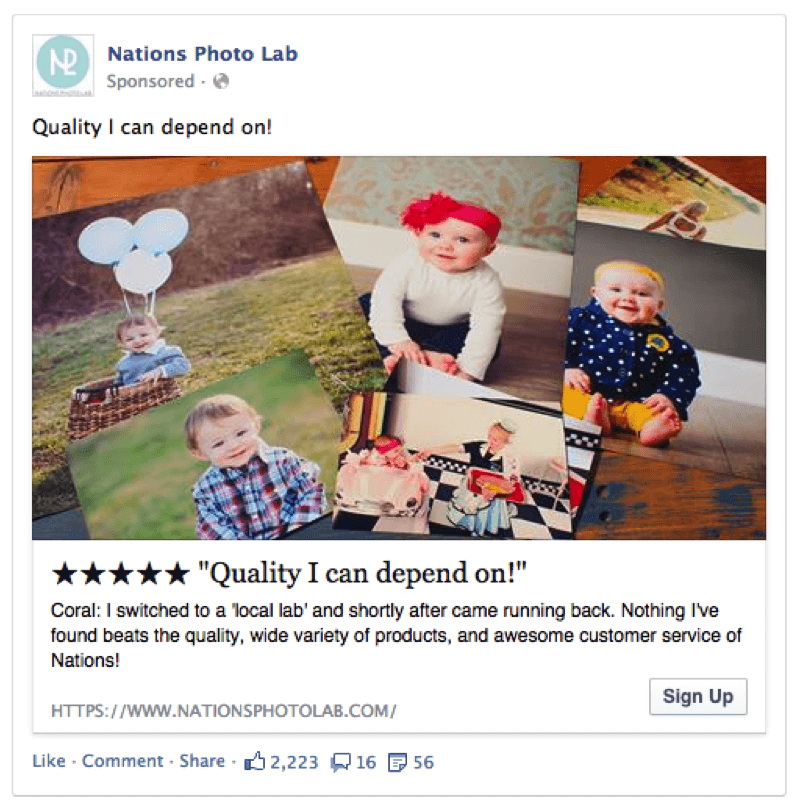
What’s the most important factor of every blog post?
Quality.
But sometimes, it’s easy to find yourself in a grind, cranking out content because you think you’re supposed to.
That’s when quality suffers.
When it comes to blog posts, it’s really all or nothing. A “good” post will get the same engagement and traffic as a “bad” post.
You have to create outstanding posts on a regular basis for your content to make a real difference.
Willpower can help you create these posts, but studies have shown that people have limited willpower.
Did you know that of 86% of marketers who use content marketing, only 30% have a consistent content strategy?
These marketers don’t have the systems in place to maximize the return on their efforts.
If you are one of the 70% of marketers creating more content this year than last year, you need to ensure you maintain a high quality writing standard throughout your content creation.
To help you maintain that quality, I’m giving you 13 questions you should ask yourself before and after writing a blog post.
Not all of these will apply to your specific business, but most will. Once you read through this article, download this simple checklist of questions to keep you accountable. Go through them for every post to ensure your continuous success.
1. “Who is this post for?”
Have you heard that when you write a post, you should do it as if you’re writing to one specific person?
It’s true. That’s how you craft an article that really resonates with someone.
If you run a new or small blog, this is a fairly easy question to answer: write to your target audience. Before each post, think of your customer avatar, and write to him/her.

But what about once you grow?
All of a sudden, you’ve attracted different types of people with one or more shared interests.
For example, Quick Sprout readers are made up of many types of people. Some are beginners trying to learn about marketing; others are employed professional marketers; and yet others are trying to market their own small businesses. And there are a few more distinct types of readers on top of that.
When I write a post, I know that it’s likely not going to resonate with everyone—that only happens once in a blue moon. But that’s okay.
Most often, a piece of content will speak to one or two segments of my audience. As long as I change it up, they all will find at least a few articles per month they will enjoy. This is another reason why consistent content creation is important.

Let’s look at some examples from Quick Sprout…
How to Make Custom Images for Your Blog Posts Without Hiring a Designer
Many beginner marketers don’t have the budget to hire a designer. This post was for them. Some small business owners might also find this article useful.
How to Come Up with Winning A/B Tests Using Data
This post was not meant for newbie marketers. While they will learn a few things, they won’t be able to apply them right away. This post was for marketers working with a significant amount of traffic and looking to increase already substantial profits.
Is It Worth Speaking at Conferences?
There is a very small portion of marketers who have the opportunity or desire to speak at conferences, and yet I wrote this post—for them. Some beginner marketers might find it interesting and consider speaking at conferences in the future, but it’s unlikely they’ll be able to apply any of the insights right away.
If you happen to run a blog with decent traffic, make sure you create detailed reader personas you can target with each post. Don’t let any important segment feel neglected as you plan your content schedule.
2. “What is the purpose of this post?”
Now that you know who you’re writing the post for, you need to decide what you want the post to accomplish.
In general, a post has 4 purposes:
- to entertain
- to solve a problem
- to encourage discussion
- to teach (not always the same as solving a problem)
Purpose #1: Entertain
Almost all posts contain entertaining parts, but their main goal is not entertainment. Conversely, some posts have a main goal of being interesting and entertaining, with only a small educational part.
Example: The $100,000 Challenge: May Update
You might learn a few things from each challenge update, but more than anything, they are entertaining. A large portion of Quick Sprout readers have never built a site that’s profitable, and they have a great interest in trying or seeing how it’s done. This post serves as an inspiration to help them move towards their own blogging goals.
Purpose #2: Solve a problem
The fundamental reason why most blogs are created in the first place is to solve a problem for a specific type of reader. That problem is typically large and complex. Each blog post has the opportunity to solve a smaller problem within that overall problem.
Example: How to Engage and Persuade People Through Storytelling
Most marketers know the power of storytelling but struggle to implement it. This is a problem. This particular blog post shows them how to solve this specific problem.
Purpose #3: Encourage discussion
In order to build a community, you need to get your readers to talk. There are many ways to do so, but the main ones are to pose a question or make an outrageous claim or observation.
Example: How to Make $100,000 a Month Within 1 Year
This is a very short post where I laid out the challenge. Not only did I claim the ability to reach a huge goal, but I also asked for your opinions to decide which site I should create. This post is one of the most commented on Quick Sprout with over 2,300 comments.
Purpose #4: Teach
Solving problems and teaching are closely related and often represented in the same blog post. I’d classify teaching as sharing general knowledge your readers need to possess before they can address specific problems. Both are important if your readers are to reach their overall goals (the reason you started your blog).
Example: How to Avoid a Google Penalty
In this article, my readers learn both what causes Google penalties and what precautions they need to take to avoid them. Technically, the reader doesn’t have a problem yet as they don’t have a penalty. In this instance, you could think of teaching as problem prevention.
Multiple Purposes
Some posts combine multiple purposes. For example, the post How Spending $162,301.42 on Clothes Made Me $692,500 is both entertaining and educational as it teaches how much looking your best really means (that sounds more shallow than it is!).
3. “Why will my readers care?”
There is a small but important difference between this question and the previous—“what is the purpose of this post?”—question.
The previous question is about the purpose of the post from your perspective.
This question, however, addresses your readers’ point of view. It will help you frame the blog post.
For example, you may solve a problem with a post, but the reader doesn’t care about the problem. They care about the pain the problem causes.
Why does that matter?
Because there are 2 types of pain points, and both need to be approached differently when writing a blog post.
Type 1: Acute
Acute pains are those that hurt now. You will go to great lengths to solve them. If you find a blog post that tells you how to solve those hurts now, you’re happy to read it. These types of pains (like fixing a Google penalty) are straightforward to write about.
Type 2: Chronic
We often live with a minor pain that comes and goes. It’s not always severe enough to seek out a solution. From a marketing point of view, for example, such a pain might be the stress that comes with a hectic publishing schedule and subpar results.
The problem with trying to solve these pains for people is that almost everyone underestimates how important they are (because they don’t hurt that much right now). Furthermore, we feel that we can live with these pains.
When your blog post solves a chronic pain, you must first focus on making your reader feel the pain before you show them the solution.
If I’m writing about creating a content schedule, for instance, I’m not going to start the post with jumping right into the step-by-step process. I might not even include it in the headline as some people might dismiss it, thinking “I don’t really need that right now.”
Instead, I’d start by illustrating the pain. I’d cite credible statistics about how the lack of a content schedule is the number one reason for failed blogs. I’d describe in detail that without a content schedule, you will never achieve the results of the blogs you admire.
Once a reader relives the pain they’ve felt before, then they are receptive to a solution you present. Then it’s your job to present a solution that actually solves the problem for them.
4. “What is my unique angle?”
Over 7 billion people live on this planet. Most are with reasonably similar points of view.
An original thought is rare.
Type in almost any topic in Google, and you will find hundreds of thousands of relevant articles.
Does that mean you shouldn’t bother blogging at all? No.
Just because a topic has been written about thousands of times doesn’t mean it’s been written in a way that can help your audience in the best way.
You may be able to connect personal experience, opinion, or other seemingly unrelated topics to offer a new perspective. And this perspective is valuable.
When I search for “How to write a good blog post,” I get 270,000 results. But even in the first few results, I can see different angles presented by different authors:
- how to do it when you lack motivation
- how to do it fast
- how to write so that people don’t just skim

In fact, I’ve written my own take on this topic in my guide to writing a data-driven post.
So, how do you find an angle that no one else has written on?
It starts with research
Before writing any post, read through as many of the best articles on the subject as possible. If you don’t, you might be repeating one of them without even knowing it.
This happens all the time in the startup community. Someone believes they have a novel idea—all because they didn’t research enough to see they already have competition.
Once you know what’s out there, you can put your own perspective on the subject in a number of ways:
- improve upon an existing angle – e.g., “write a good blog post as fast as a professional typist”
- add personal stories – all personal experience is unique
- add your opinion – while it shouldn’t be all about your opinion, your readers follow you because they value what you think
- combine two topics – e.g., What Einstein Taught Me About Death
Whichever you choose, find a way to present an original angle. The simplest, although not most comprehensive, way to double-check you’ve found a unique angle is to simply search for your headline in quotations. You have a unique angle if you can’t find any other results.

5. “What’s the best way to present my point?”
Throughout history, authors have expressed themselves through many different forms:
- poetry
- song
- plays
- books
- journals
- stone tablets…
Each form has its own advantages and disadvantages as a means of expressing a message. Some are more entertaining than others, while others are more informative. Some are great for long messages, and others are great for short ones.
When it comes to a blog post, you have a variety of formats to incorporate into your post:
- text
- images/gifs
- video
- infographics
- audio
- embedded social media (tweets, slideshows, etc.)
- formatting (bullets, bold, font size, etc.)
They each have a specific purpose, and each has its own strengths and weaknesses.
Text
Almost all blogs are built on text. It’s by far the simplest, fastest, and cheapest way to convey a message. But it’s also often not very effective at getting messages across. Reading takes a lot of time, and people can process images up to 60,000 times faster than words.
Images
You can’t create a blog post with just standalone images, but they can be used to enhance your content. Images can quickly convey data in a clear way or provide simple instructions that would otherwise require complex text descriptions. There are many types of images you can use in your posts: charts, screenshots, animations, and more.
Sites, such as Buzzfeed, often base entire articles on images or gifs illustrating their points:

Video
Some things need to be learned visually, and images may not be enough to help with that. If you’re giving an overview of a tool, it can take several images to show what you need to show. In contrast, a video that’s 30 seconds to 2 minutes long can often show the features in an easier-to-understand way.

Infographics
If you know me at all, you know I love infographics. Not only do infographics generate more shares than regular posts, they also allow you to quickly highlight the most important aspects of a topic.

As a bonus, it’s very easy to write a post about a topic and then create an infographic with the key takeaways that can be used for another post.
Audio
Podcasting has exploded in the past few years. There were over 1 billion podcast episode downloads in 2014. But that doesn’t mean you need to create a traditional podcast if your readers like audio. On some posts on the Crazy Egg blog, we embed a short “podcast” that summarizes the content in the article. Anyone who doesn’t like to read can listen instead.

Interactive content
Interactive content is still fairly underutilized, but it’s a great way to get readers to engage with your blog post. If you can find a way to get a reader to take action on something you mention, it can help illustrate a point you’re trying to make.
Quizzes and calculators help readers learn and apply something immediately. For example, SilkRoad built a truly ugly calculator for their homepage to show prospects how much money they could save on their hiring and training procedures.

Formatting
Decide which points are most important and need to be emphasized. Format the post so that these are the biggest and bolded on the page. In addition, you can (and should) use formatting to make your article more readable to lower your bounce rate.
Overall, you can prove your point in many ways. Think about which ones you can create and which ones will get your message across more effectively. Don’t be afraid to combine them if you believe it will be most effective.
6. “Does any research need to be done ahead of time?”
The reason that most marketers “get away” with not having a content schedule is because most of the time, they can write a post last minute.
I still don’t think that’s a good idea for a number of reasons, but aside from that, you can’t always write at the last minute.
This means you’ll either have to publish a subpar post (useless) or postpone posting altogether, which can have consequences of its own.
The reason why you can’t always write a post at the last minute is because some of them require work before you even start writing.
Most posts don’t require too much work. I typically spend about an hour researching my topic and finding useful statistics that support my points.
But not all research is like that.
If you need to interview someone, especially someone busy, it can take weeks to schedule a time when you’re both available.
If you need to collect specific data for a post, such as the results of a split test, that also can take weeks or months. For example, Bryan Harris split-tested the effects of removing his sidebar on VideoFruit. He couldn’t have done that overnight.
What if you need to analyze that data? That can take even longer. For example, HubSpot, among other companies, frequently publishes massive reports of benchmarks. The team needs to spend weeks or months collecting the data and finding important trends that can be presented as statistics.

Ideally, you should ask this question when you first come up with the post idea. At the very least, ask it before you start writing so that you can complete all background work as soon as possible.
7. “Is my deadline reasonable?”
Before you start writing, you should always have a deadline—and a reasonable one at that.
If your deadline is too short, you’ll end up rushing the post and producing mediocre content. We all know how that goes: less traffic, less engagement, and fewer subscribers.
But having a deadline that’s too long isn’t good either.
Work fills the time allotted for it; that’s Parkinson’s law. Extra time gives you an excuse to slack off.
So what you really need is a reasonable deadline.
This means that this particular question has to be asked before you even start writing. It needs to be asked when you’re planning your content schedule.
Don’t have a content schedule? Make one. That’s the only way you’ll be able to produce great posts on a regular basis. It allows you to have a little buffer room in case a post takes longer than expected.
8. “Can I go the extra mile?”
To really stand out in the flood of content online, you need to write exceptional content.
Amazing content has to be many things:
- interesting
- useful
- actionable
- fun to read
Creating a great blog post is more like crafting a piece of art than simply producing a manual on how to solve a problem.
There are many ways to go the extra mile, but I’d like to highlight a few of my favorites.
a) Custom images
As discussed before, images can help you highlight and reinforce concepts. On top of that, they can be entertaining. Some blogs regularly use comics and images to illustrate key points:

b) Spreadsheets
If you’re writing a blog post that advocates using a spreadsheet to solve a problem, give your readers a sample or template. This will increase the chances of them taking action. You can even use this as a content upgrade.

c) Checklists
If you write a step-by-step guide, what’s more useful than a checklist? Create a simple checklist, and let your readers download it. Again, they will be more likely to use it and to associate any positive result that comes from its use with you.
d) Back up claims
When I write, I try to back up all statements with credible references. It’s the main principle of writing data-driven posts. References help readers trust you and your posts more than a simple opinion.
9. “How does this lead into my next post?”
At some point during the planning, writing, or editing process, ask yourself this question.
When you consider your next post, you have the opportunity to create cliffhangers. Make a note somewhere in the post about a related topic that you’ll be covering shortly in the future.
Additionally, knowing what you’ll be posting about next is extremely important if you’re about to launch a product. You need to write your post while keeping in mind what role it will play in your launch. It may be a case study, an educational post, or a post that highlights a chronic pain.
During the launch, you’ll email your subscribers a mixture of content and information about your product. It often makes sense to include links to recent blog posts to support your case studies or to educate subscribers—but only if you’ve planned relevant posts.

10. “How will I promote this post?”
Just like it’s a good idea to plan your content in advance, it’s also a good idea to plan your promotion.
Not all forms of content promotion need to be considered during the writing of your blog post, but some do.
One of my favorite tactics is to simply email everyone I mention in a post, letting them know that I enjoyed their particular post and that I linked to it in my article. Most of them will be happy to read it and share it with their audiences if they liked my post.
Before you publish your post, carefully go through it to see if you missed any opportunity to mention someone’s work.
Note that while you could mention someone for the sake of getting a bit of extra traffic, I do recommend linking only to posts and resources that add value to your post.
11. “Will I repurpose this post?”
Repurposing content is one of the best ways to bring down the cost of each individual piece of content you produce.
If you have a limited budget, this is how you can consistently publish high quality posts.
If you ask yourself this question before you start writing, it will make your life a lot easier.
How?
Imagine if you’re writing a blog post and also plan to turn it into an infographic. Instead of having to pull out all your stats and main points later, you can put them into a secondary text file as you’re writing the post.
In addition, you can paste the URLs that you’ll put at the bottom as your sources in that document instead of going through your blog post later to get them one by one.

12. “What do I want readers to do after reading this?”
Blogs can have many purposes, but each blog post should help you accomplish each one.
Let’s hope that by the end of a blog post, you’ve imparted some wisdom to your readers or discussed an important problem or topic.
There are two things you should include at the end of each post.
First, while you may think it’s obvious what your readers should do next, it usually isn’t that obvious to them.
You need to spell it out. Tell them exactly what they should do with the information in the post.
Secondly, include some sort of call to action (CTA). At this point, they’ve taken the time to read your whole post, so they obviously found it useful. This is your chance to ask for a small “payment” for the post.
Common CTAs include asking your readers to comment by answering a question (my favorite), asking them to share on social media, or asking them to sign up to your list.

You might find that one type of CTA is more important to your business than another, so focus on that, and mix in the others when appropriate.
13. “How will I measure success?”
One of the hardest things about blogging for a business is tracking the results.
Not all posts are created equal. Some take weeks to write, others take hours. Some have custom images, some don’t. And almost all posts address different topics, which makes them hard to compare.
While we generally look to see whether we increased the number of backlinks, comments, or shares over a long period of time, these metrics aren’t very useful when determining if a single post is successful or not.
But we also know that the vast majority of engagement or results come within the first week or two of publishing a post. That gives us a time frame we can use to evaluate the results of each post individually.
Before you write the post, and while you are editing the post, ask yourself how you will measure its success.
Some posts are made to generate links and social shares, e.g., roundup posts.
Others are made to generate discussion, e.g., my earlier example of my $100,000 per month challenge introduction.

Yet others are written to build relationships with influencers. A post can give you a reason to reach out and give them something of value.
You should regularly review the results of your past posts. The idea isn’t to deem each one a failure or success but to learn what does and doesn’t work for your business and your audience.
Conclusion
Nothing in this article is particularly complicated to apply—that’s the point.
These are simple questions you should ask yourself through your content creation process to make sure you don’t forget anything important.
I’ve put together a basic checklist you can print out and keep at your desk if you’d like: download it here.
I’ve said it before: consistency leads to success. Get in the habit of answering these questions for every post, and you will produce better content on a regular basis.
Now I have a question for you, which I’d like you to answer by leaving a comment below.
Which of the questions in this article is most important for your blog?