Tuesday, July 26, 2016

How the Personality of a CMO Compares To Others In the C Suite

Last December, executive search firm Russell Reynolds released the findings of a report they conducted which they called Inside the Mind of the CMO. For their research they conducted online psychometric testing of 36 CMOs as well as other c-suiters, if you will. 


The results were quite interesting and insightful to say the least. 


Let's jump right in with a finding. 


As the authors of the report point out, CMOs, when compared to others in the c-suite, have a markedly extreme leadership and behavioral profile. 


From the report:


  • The first set of attributes (above) centers on CMOs' innovative, pioneering spirit-they act unconventionally, test limits and are not beholden to structures. These traits conform well to a conventional mental picture of a CMO.

  • The second set of attributes provides a welcome explanation as to how these innovators are successful in action-they use their strong social orientation and persuasive tactics to operate in a remarkably active and productive fashion.


I can tell you from the hundreds and hundreds of CMOs that I have interviewed and gotten to know personally over the past 10 years as a contributor to the Forbes CMO Network, these findings do not surprise me in the least. The fact that CMOs were found to be nearly 50% more imaginative than their c-suite counterparts is not only unsurprising but I would have guessed that percentage to be even higher. 


Help or Hinder?

For many CMOs, the aspiration is to progress along the ladder and make it to CEO. And while the report notes that CMOs "can bring a uniquely innovative sensibility to that role" they differ differ significantly from chief executive officers on several key attributes which may help or hinder their chances of growth.


Personally I happen to love the fact that CMOs are 33% more unconventional than CEOs and 32% more like to eschew structure and guidelines. As for being flashy, I don't even know what that means. But overall this could very well speak to the fact that a great number of CMOs are working with and for "old school" CEOs so when they are compared to them, of course they will appear to be more unconventional, etc. 


But that's a good thing. 


However, the report authors offer the following advice for CMOs wanting to be CEOs when they grow up. 


  • Be in the right place. Faster-moving or more transformational industries, in particular, are better suited to the CMO leadership style, as are companies in the midst of change or innovation programs. CMOs may struggle as a CEO in more heavily regulated industries.

  • CMOs need to moderate how they display some of their more extreme attributes. CMOs test limits, are bold and are upfront in their influencing style. CEOs seek to understand different perspectives and involve others in decisions but do not overanalyze. They achieve success through others yet remain tough minded.

  • Make sure others are on board. The CMO leadership style can be unconventional, colorful and flashy. CEOs exhibit measured emotion. CEOs excel at calculated-not careless-risk taking. They display intensity but maintain control.


The Boardroom


One way and place the CMO can show their value is by sitting on the board and in the boardroom, literally. Currently very few marketers sit on boards but as the tide of Modern Marketing advances, more marketing executives are rising to the top because credibility in the boardroom is measured in hard numbers. 


Download Marketers in the Boardroom and learn why marketers deserve to have a seat at the most senior level, get hints and tips for what marketers can do to attain board level and more. 


Tuesday, June 28, 2016

How to be a Newbie & Succeed

How to be a Newbie & Succeed

Here's a challenge we all face, whether we're bloggers or podcasters or freelancers or makers or hopeful entrepreneurs of any shape…


We've got to be experts to succeed.


Or, at least we have to look like experts, right?


Or, at least all the people that you follow are experts, right?


But in Fizzle's forums I've had so many damn conversations over the past 3+ years with entrepreneurs at all stages of the journey. And I see people making a very common mistake in how they think about themselves.


Here, watch the video for the skinny (and my John Mayer impression):


(BTW, if you like that video subscribe to our YouTube channel and like us on Facebook because I'm making more of these suckers.)


The gist is this: I see now that it's common to think you're further along than you actually are.


You might think you're further along than you actually are if:


  • You're not making progress on your thing. You've got ideas but they're not getting done.

  • You don't have results. You try stuff out but it doesn't work.

  • You aren't asking questions. You're pretty sure you know exactly what you should be doing.

  • Your mood shifts often from very excited to super frustrated or depressed.

  • You feel like you lack motivation.


Here's the thing, it's really common to believe you're further along than you actually are.


Here's how it happens:


think like a newbie and succeed experts vs us


That black dot at the bottom left is you - let's say you're just starting out.


BUT, you've been watching an expert for a while. Maybe it's Seth Godin or Elizabeth Gilbert or (my favorite) Guy Fieri. The expert is the open circle at the top.


You see exactly where the expert is right now and assume that's what you've got to be like if you want to succeed.


But you don't see all the shit that's made them who they are.


think like a newbie and succeed experts journey


That dashed line is the journey the expert's been on since they started as a newbie so many years ago. This line represents the challenges, fears, triumphs, failures and successes that the expert has attempted between where they started and where they are today.


But you don't see that. All you see is where they are right now.


think like a newbie and succeed all you see is the expert level


We don't see the journey. All we see is where they are today. And that's where we think we need to start from.


That's dangerous.


The danger


I'm telling you all this because it's really dangerous to think you're further along than you are.


You'll never ship anything. You'll never try anything.


And that's dangerous because as indie entrepreneurs we live and die by the work we produce… if we're not creating and making and connecting with our audience we aren't growing.


DON'T PUT YOURSELF UNDER ALL THIS UNNECESSARY PRESSURE.


Instead, embrace being a newbie. Accept being a learning. Realize that your path to success will be as windy and (cork)screwed as others.


It will take time, it will take sweat and it will be exhilarating.


A quick trick


Here's one quick trick I've been using myself to embrace my newbie-ness:


think like a newbie to succeed sentence trick


Here's a few examples:


  • I want to get more politically active: It's not like I'm going to be Ghandi, but I can at least host a documentary night with my friends.

  • I want to do more wood working: It's not like I'm going to be an episode of This Old House, but I can at least take a stab at making a coffee table.

  • I want to be a public speaker: It's not like I'm going to be Tony Robbins, but I can at least try to get a speaking gig at the local Rotary Club.

  • I want to blog about motherhood: It's not like I'm going to be The Dooce, but I can commit to writing 10 posts in the next 10 weeks.


It's a simple trick, it may not work on you as well as it does for me, but it helps me get over my precious sense of how professional or cool or mature I am.


Shit man, it sucks to suck at stuff, and we all suck at first. I see too many of us freelancers and creative business people putting too much pressure on ourselves to be better.


YES, push to be the best.


YES, give it all you've got.


SURE, fake it till you make it and every other trite piece of advice out there.


Sure, do all that stuff. But maybe there's a way through where you embrace your newbie-ness, get enthusiastic and be authentic instead of just another posturing internet person.


We at Fizzle will be right there along side you every step of the way.


Thanks so much for reading!


Wednesday, June 8, 2016

6 Unscalable Tactics That Will Get You More Customers

The biggest problem most businesses have is getting more customers.


Business owners believe that if they could just find that one magic growth tactic, their business would be set.


Unfortunately, the vast majority of them will never find that tactic.


And while they're searching for that magic bullet, they're passing up on smaller, unscalable tactics that could be getting them a consistent stream of new traffic.


The confusion mainly comes from misinterpretation of the concept of growth hacking:


image06


The only real condition to growth hacking is prioritizing customer/user growth above all else.


However, too many marketers seem to believe that growth hacking must involve rapid, viral growth that makes or breaks the company.


Sometimes, maximizing your growth potential means focusing on unscalable tactics. They cost more per acquisition but deliver customers when other tactics are failing.


These are best applied early on in a business, when scalable tactics (advertising, really high quality viral video campaigns, etc.) are not realistic.


I'm going to share 6 unscalable tactics that are often very effective for young businesses looking to grow. Probably, not all of them will apply to your business, but you should be able to identify at least a few you can try. 


1. Trialists rarely leave for no reason


It makes me want to bang my head against my desk.


via GIPHY


Some marketers are so focused on getting new customers that they don't realize that what happens after a signup or purchase is the most important factor behind growth.


Growth comes from creating a product that is as close to the needs and wants of your customers as possible.


You can't create that kind of a product going on intuition, without any actual customer feedback.


No feedback is feedback: If someone signs up for a demo or a trial or purchases something from you, that tells you something.


It tells you that:


  • They need a solution to a problem you're trying to solve.

  • They like the sound and/or look of your product.


But if a customer stops using your product right after they start using it (particularly for software products), that's your feedback.


Their problem didn't just disappear. What happened is they concluded that your product couldn't help them sufficiently.


What's the point of getting new customers if you barely retain any of them?


On top of that, you need to absolutely thrill customers if you want them to recommend you to others.


The solution? Get feedback: As long as you collect email addressed when people sign up, you can contact them.


If a large portion of your new signups are disappearing on you, personally send them an email and find out how your product fell short.


The customer is still in “pain” because they haven't solved their problem, which makes them pretty receptive to outreach.


It's not scalable to email every single new customer you get, but this type of feedback is how you'll make your customers love your product. You could even survey a fraction of your customers and still get really valuable feedback.


You can also preemptively get feedback by sending your customers a welcome email, asking them how they found you and what they're hoping your product can do for them.


Here's how Groove did it with great success:


image01


Try something similar, and you'll get a high response rate with great feedback.


2. Don't be afraid to sell one-on-one at first


I've started many companies at this point, and believe me, they weren't all successes at first.


It's a huge job to start a business from scratch. Getting customers is just one area, but it is indeed very difficult since you don't have your perfect product yet or any word of mouth in most cases.


Sometimes, you can throw money at advertising and get your growth off the ground.


Sometimes you can't. Whether it's because of your budget or because of your product, advertising isn't always a great option.


An option that I recommend is to have one-on-one conversations with your potential customers.


Where do you find them?


  • Forums

  • Sites like Reddit

  • LinkedIn, Facebook, and other social media sites

  • Friends in real life


Let me give you an example. Say you're selling a website builder. You could spend time on the startups and entrepreneur subreddits, forums such as Warrior Forum, and many groups on LinkedIn and Facebook.


It will take time, but you'll come across questions and conversations like this one I pulled from Reddit:


image04


Someone was looking for a website builder with search functionality.


Then, you can send the user a message. Something like this:


Hey, I saw that you were trying to create a search based website. I actually have a lot of experience with that sort of thing and even built a website builder for that specific reason.


I'd be happy to answer any questions you have about it. Just send me your email address, and we can hop on Skype or Slack or have a quick email chat.


Regards,


Neil


Note that everything in this message is about how you can help them, and not the other way around.


It's much easier to sell to someone when you have their full attention during a chat, and especially when you're actually providing them with additional help and guidance.


3. Make customers come back with a little extra effort


Like I said above, the customer experience after they try or purchase something is what leads them to become return customers and to start talking about your product to others.


One way you could make sure they end their experience on a high note, which will encourage them to talk about your business and come back, is with a handwritten thank-you note.


Unless your customers are very young, handwritten letters are typically perceived as a caring, personal gesture.


For example, this is a simple card that a Jawbone customer received:


image07


When the recipient of the note posted the above photo on Twitter, this one tweet resulted in over 100 shares (at the time of writing).


While a card will take you a few minutes to write and send (if you batch them), it will return much more to you if do it well.


Could this be scaled? If you have thousands of customers, it'll be hard to write a real letter to each of them.


Some businesses, such as Bond and MailLift, offer services that will write the letters for you. You just need to provide the addresses and names:


image05


Ideally, you don't want to be writing the same thing to each customer. So, while this is an option, it's not quite as good as writing your own letters.


4. Trade your product for something more valuable


I mentioned it earlier: it's tough to get customers for a new product with no customer base.


People want to see that others have had a good experience with something before buying it themselves.


Translated to marketing, this is social proof, primarily seen in the form of testimonials and case studies.


image03


Both can provide assurance to potential customers considering buying from you and often have a large impact on conversion rates.


You have to give to get: Great testimonials or case studies are worth several times the cost of your product.


One option, early on, is to give away your product or service in return for a testimonial or case study.


The hard part is finding a way to actually get this offer in front of people.


It will depend on your product.


For some, you can simply make a forum post or Reddit thread and offer a few samples of your product (say 5-10) to any users willing to give you feedback. You can get their emails and go into more details later.


If that's not an option, you need to be more creative:


  • Offer it to anyone who contacts you with questions about the product.

  • Install live chat on your website, and offer products to anyone who engages.


image00


  • Actively reach out to customers if possible (say you sell a product for bloggers)


Most people are pretty receptive to trying something for free.


Once you've invested in these testimonials or case studies, you need to make sure they're effective. Luckily, I've written about it in the past:


5. Have a broad market? Consider stickers…


I've mentioned Reddit a few times in this post as well as many of my other posts. Reddit is now one of the largest sites in the world.


Do you want to know how Reddit got off the ground?


In 2005, the two co-founders got $12,000 from Y Combinator.


That's $12,000 for the whole business, so not a ton to go around. They were left with $500 for a marketing budget.


They promptly spent that $500 on stickers of their alien mascot:


image02


They plastered them in public everywhere they could and handed out the rest at events or to random people on the street.


Soon after, stickers started showing up on social media and other websites, and people learned about Reddit. The picture above is of Wil Wheaton in the background of a sticker.


I love this idea because you'll always stand out. Just make sure that your site or product is identified on the sticker and that it ends up in view of the people you're trying to target.


The Reddit stickers worked out well because they were placed on bus stations and buildings on college campuses. Reddit had a pretty broad audience, even at the start, but primarily focused on young, tech-savvy users (college students).


You don't necessarily have to use stickers. You could try:


  • Backpack or luggage tags

  • T-shirts or hats

  • Bracelets

  • Glow sticks


Be creative.


6. Get out and speak


Speaking at events comes with a lot of benefits.


For one, it may lead to direct payment, which alone is highly rewarding.


But when you're first starting out, the biggest benefit is having an audience in front of you.


Most crowds consist of customers and peers (other businesses in your industry).


As a speaker, you position yourself as an expert-an expert with whom many people in the audience will want to do business.


If you have something to sell to those businesses, you'll almost always make some sales. More importantly, you can find ways to work together.


For example, a real estate agent could partner up with a home decorator. The home decorator could touch up houses for sale and leave business cards or pamphlets for people the agent shows the houses to.


The agent gets a better looking house to sell, and the decorator gets more customers. Win-win.


Where do you start if you want to speak at conferences? Unfortunately, you can't just jump in and speak at the biggest ones in your industry.


You're starting from the bottom, and you need to start with whatever experience you can get.


Focus on getting experience first so you can leverage it later to get speaking opportunities at bigger events. If you can get customers from these first few speaking gigs as well, that's just a great bonus.


To find a list of conferences actively looking for speakers, Google “(industry) conferences speaker proposal”:


image08


Put in some decent effort into your proposals, and you'll get at least a few chances to speak.


Here are some quick tips on how to increase your chances of being invited to speak:


  1. Stick to the requirements – Different conferences want to know different things about their speakers. Always read all the details they provide, and try to describe yourself according to them.

  2. Don't be a generalist – Never submit a proposal and call yourself something like a “marketing expert.” Instead, pick a specific area, e.g., “influencer marketing expert.”

  3. Your bio leaves a mark – You'll get a chance to submit a bio most of the time. Put emphasis on your most impressive professional accomplishments.

  4. Talk specifics – Part of a proposal is a topic you could speak about and a short description. Try to think of something unique that the audience would love. That way, no other speaker could fill your spot.


Apply to several conferences at the same time because they can take a little while to get back to you.


Conclusion


Scalable growth is sexy, but it's not always possible.


If your business is still struggling for customers, don't be afraid to use unscalable marketing tactics.


I've shown you 6 in this post, so you should be able to get working on at least one right away.


If you have any experience with unscalable growth tactics, I'd love it if you shared your creative ideas in a comment below.


Wednesday, May 18, 2016

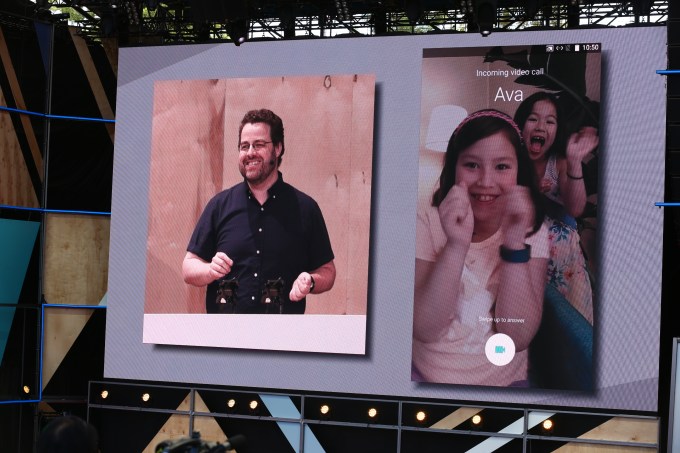
Google shows off Duo, its new HD video calling app and answer to Apple's FaceTime

O92A6133 Some have criticised Google for falling behind when it comes to social networking and new communications services, but the company is how working hard to catch up. Today, the company announced a new video calling app called Duo - a high-definition app for Android and iOS devices. Duo was unveiled on the heels of Allo, Google's new smart messaging app. Why the decision to launch… Read More

Monday, May 9, 2016

Big Periscope updates: Streaming from drones, videos won't disappear

Drone
Feed-twFeed-fb

Facebook Live might be the hottest live-streaming app right now, but Periscope is raising its game to meet the new challenge.


The Twitter-owned streaming app gave Mashable a look at three new features it plans to roll out over the next few weeks. The service will soon support streams from drone cameras as well as let all users automatically save their broadcasts permanently on the service (which rolled out in beta last week). Also on deck: New search and sharing features that'll make it easier to find good things to stream.


More about Dji, Drones, Periscope, Social Media, and Twitter


Friday, April 29, 2016

The $100,000 Challenge: March Update

march update


We finally finished the last month of the $100,000 challenge. March was an awesome month for Nutrition Secrets. Not only did the traffic grow to 218,811 visitors, but revenue did too-it went up to $121,492.65.


It wasn't hard to hit the revenue goals as we had enough fish oil in stock, plus we started to generate money from affiliate sales.


So let's dive right in…


Traffic


Compared to February, the traffic went up to 218,811 visitors and 269,814 pageviews. The increase was only 18,102, which isn't much.


But considering that the popularity of nutrition and fitness sites is cyclical (January and February are most popular) and that Mike didn't blog much on NutritionSecrets.com in March, it wasn't too bad.


Overall, Mike has slowed down on the blogging front. Over the next few months, he wants to try a few fun content formats such as infographics and wants to see what happens if we were to dump a few hundred grand into the blog. It won't be much of an experiment at that point, but we are just curious to see if we can get the blog to a million visitors a month.


traffic sources


Nonetheless, the traffic isn't performing too badly. Even in April, the traffic has been on an upward trend while little to no effort has been put into the blog since the challenge has been over.


Revenue


The revenue is a bit more complicated to breakdown as it is coming from two sources now: Amazon and affiliates.


In March, revenue from Amazon hit $112,573.30.


amazon revenue


There are a few key elements to growing Amazon sales:


  1. Reviews – the more people you can get to leave a review, the better off you are. Most people don't even read the reviews, but if they are high in ratings and you have tons in quantity, you are in good shape. If you have a blog that's driving sales, a great way to get more reviews is through marketing automation. You can promote the product to your email list, and then after a few weeks of promoting your product to those people, you would send an automated email asking them to leave a review. You won't really know who bought the product, but you would still put the review email-applicable to a portion of your list-in your sequence.

  2. Keywords – with Amazon, you can add keywords. Most people add basic ones like “fish oil,” but as you know, it is all about the long tail. Amazon opened it up so you can stuff hundreds of keywords now, and with the use of Google Keyword Planner, you can come up with popular variations. You'll then start ranking for tons of keywords on Amazon.

  3. Combating negative Amazon reviews – similarly to what happens when people employ negative SEO, competitors sabotage your Amazon listing by taking up your front page with terrible reviews. They do this to tank your sales so they can generate more income. You fight this by building up your email list on your blog and continually blasting out to your list when you have bad reviews, asking your readers to up-vote the positive ones.

  4. Ads – Amazon allows ads on its platform. Whether it is profitable or not, ads help you generate more sales. And if you can increase your sales velocity, you'll find that your listing climbs up higher and starts to stick-it stays up there even after your ads stop showing. Sure, other people can do the same thing, but most don't.


As for affiliate income, we started to push stuff by the Truth About Abs guys. We started doing email blasts to our list in order to generate the sales, and it has been working out well. The copy isn't too bad, but there are two reasons it's working out well.


aweber


  1. We collect a lot more emails – we are generating 300 to 400 email sign-ups a day. It's much larger than our previous numbers for one reason: we turned off double opt-in. Aweber usually requires double opt-in when you use third-party software to collect emails, but Mike called Aweber and got them to disable double opt-ins.

  2. Good copy – our copy converts well. You can see an example email below. And we have many more emails like this in the sequence. So, we continually send you affiliate offers over time, which helps.


Here is the email copy we have been testing:


Email – This plant food HARMS your metabolism & heart


Hi {!firstname_fix}


Sometimes it's not the enemy you know that's the problem, but the friend you think you know.


In this case, I'm talking about nutrition in foods. It's common knowledge that stuff like sugary drinks are just plain bad for you. The best you can say is that your body can absorb the bad effects if you only have them occasionally.


But what about foods you thought weren't bad, and you heard were actually good for you?


I have some bad news, and some good news. The bad: some so-called “healthy” foods may be the cause of why you work so hard to eat healthy and haven't seen the results you expected. The good news: There's a solution I read about from best selling author Mike Geary.  Read on… (removed affiliate link)


Email – 2 Simple steps to REMOVE visceral belly fat (the DEADLIEST type)


Hi {!firstname_fix}


People often refer to past times as “the good old days” with a nostalgic tone. At least when it comes to many nutritional and health practices, I think of them more like the “bad old days.”


For example, people thought the wonders of science had delivered new, healthy products called “trans fats” that were featured in margarine, to replace that nasty butter. We now know that trans fats are about the worst thing you can coat your innards with.


People also thought they could do “spot reducing” of unattractive belly fat by using those jiggling-belt machines, or some other gimmick.


Well, belly fat certainly is still unattractive, and research says it's also a danger sign. But research has also identified more-effective ways of getting rid of that spare tire. Here's how. (removed affiliate link)


Email – 7 “fatty” foods for a flat stomach


Hi {!firstname_fix}


I spend full time on nutrition- and health-related activities. That's the business I'm in.


I'm also an improvement junkie, always looking for the latest, best information. So you can imagine that I've pretty much seen it all: Every product, every supplement, every type of exercise.


Most of them are underwhelming. Yawn.


I'm writing you today because I recently came across something that made me sit up and pay attention. It's a short-term blueprint for eating the right foods to burn substantial fat, and it's all explained here… (removed affiliate link)


You can find high converting offers on sites such as Clickbank. They even sort the offers by popularity. I need to get a screenshot of our Clickbank revenue and our other affiliate income sources from Mike as he created the accounts and has the logins. Once I do, I will update the post with a screenshot (we use three networks).


The total affiliate revenue was $8,919.35.


Profit


As for monthly profit, it was high…but for a different reason than you might think. When you sell tangible products, you buy tons of inventory and then sell it over the following few months. We didn't want to be out for our last month, so we spent a good chunk of money in the previous month, and, of course, we bought more in March.


Here is a breakdown of the expenses:


  • Fish oil – $68,492.52 (including Amazon fees, shipping to Amazon for Prime, coupon-related expenses, and producing more inventory)

  • Aweber – $149

  • Designer – $375 (continually tweaking the site)

  • Hosting – $249

  • Mike – free (Mike doesn't get paid, but he owns a percentage of the blog)

  • Accounting – $290 (we are now paying a bookkeeper to help out with the books)


Total expenses came out to $69,555.52.


That brings the total profit to $51,937.13.


Of course, to maintain the growth, we would have to keep buying fish oil, but after awhile, we would cap out on sales, and our margins should be a healthy 30% plus. As for March, I didn't spend much on buying tons more inventory as I wanted to show that selling supplements can be profitable.


Conclusion


Overall, the $100,000 challenge was fun, but I wouldn't do it again. It's just too much work with everything I have going on.


It was still a good learning experience. One thing I realized is how much harder it is to rank on Google today compared to 5 years ago. Almost all of my sites are old, so it is much easier for them to rank.


And although NutritionSecrets.com generated good traffic, if it were 5 years ago, the blog would have been at a million visitors a month with the same amount of effort.


So, what do you think of the $100,000 challenge?